
Quotation vs invoice vs receipt: what each one is for
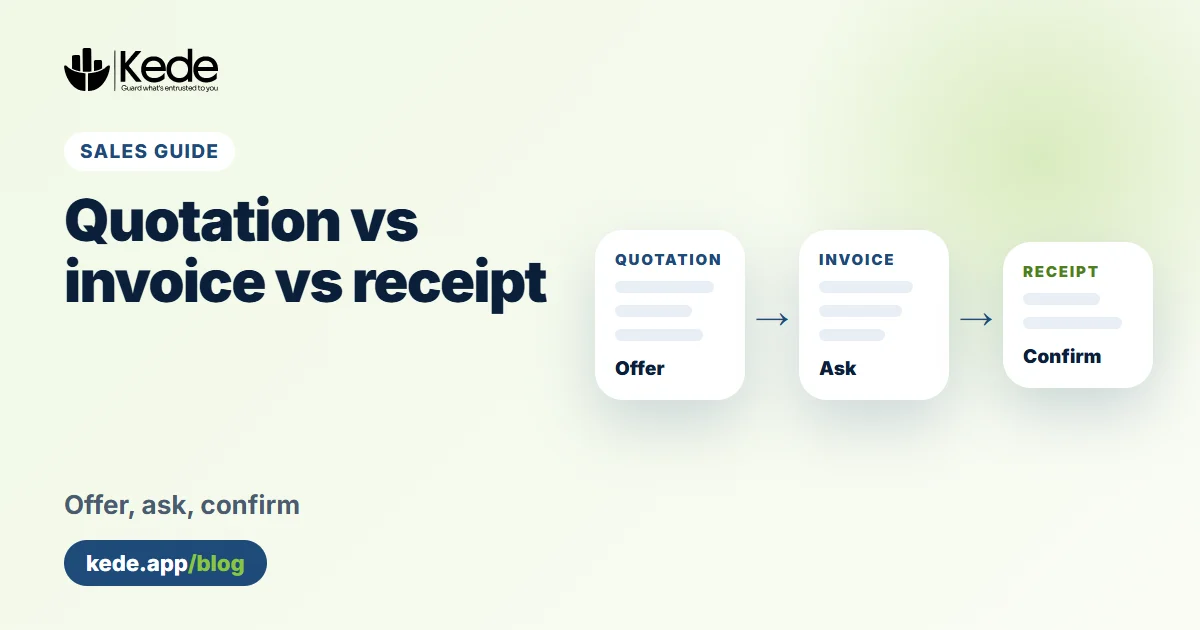
A quotation offers, an invoice asks and a receipt confirms. Here is when to use each one, where a proforma invoice fits, and how to keep them linked.
Quotation vs invoice: many small business owners use the two words as if they mean the same thing, and then add "receipt" to the mix. In fact, each document has its own job and its own moment in a sale. This guide explains the difference between a quotation, an invoice and a receipt, where a proforma invoice fits, and which one to send when.
Quotation vs invoice vs receipt at a glance
Think of one sale as a short journey. First the customer asks your price, then you deliver and ask for payment, and finally you confirm the money arrived.
| Quotation | Invoice | Receipt | |
|---|---|---|---|
| When you send it | Before the sale | After you deliver | After the customer pays |
| What it says | "This is my price" | "Please pay this amount" | "I received this money" |
| Does the customer owe money? | Not yet | Yes | No, or less than before |
| Has a due date? | A "valid until" date | A payment due date | No |
| Typical number | Q-001 | I-001 | R-001 |
In short, a quotation offers, an invoice asks and a receipt confirms.
What is a quotation?
A quotation, or quote, is your offer to a customer before they buy. It lists the items or work, the prices and the total. It also says how long the prices are valid, for example 14 days.
A quotation is not a bill. The customer owes you nothing yet. They may accept it, ask for a better price or decline it. For that reason, a clear quotation helps you win the job. Show exactly what is included, so nobody argues later.
What is an invoice?
An invoice is a request for payment. You send it once the customer has agreed and you have delivered the goods or done the work. It shows what they owe, the due date and how to pay you.
This is the key point in the quotation vs invoice question: the quotation says "this is what it will cost", while the invoice says "this is what you now owe". If you want the full checklist, read our guide on how to make an invoice.
What is a receipt?
A receipt is proof of payment. You give it after the customer pays, whether they pay in full or only part. It shows the amount received, the date, how they paid and, if anything is left, the balance.
Customers keep receipts as proof that they paid. Likewise, you keep a copy as a record of money that came in. A receipt for a part payment is especially important, because it protects you both when the balance is settled later.
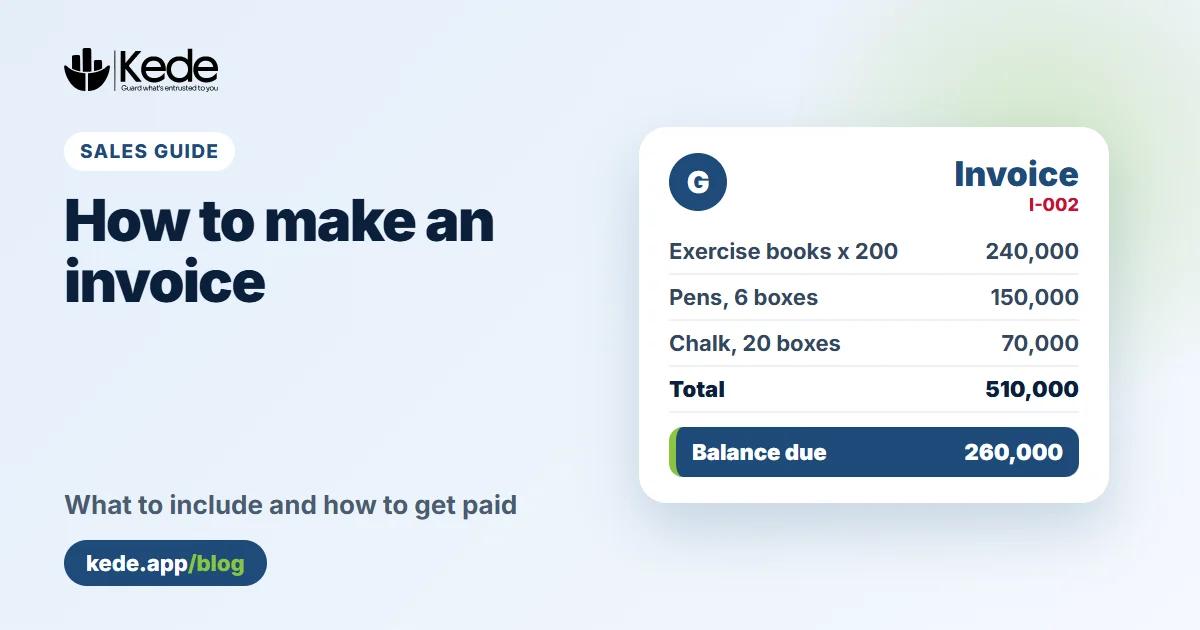
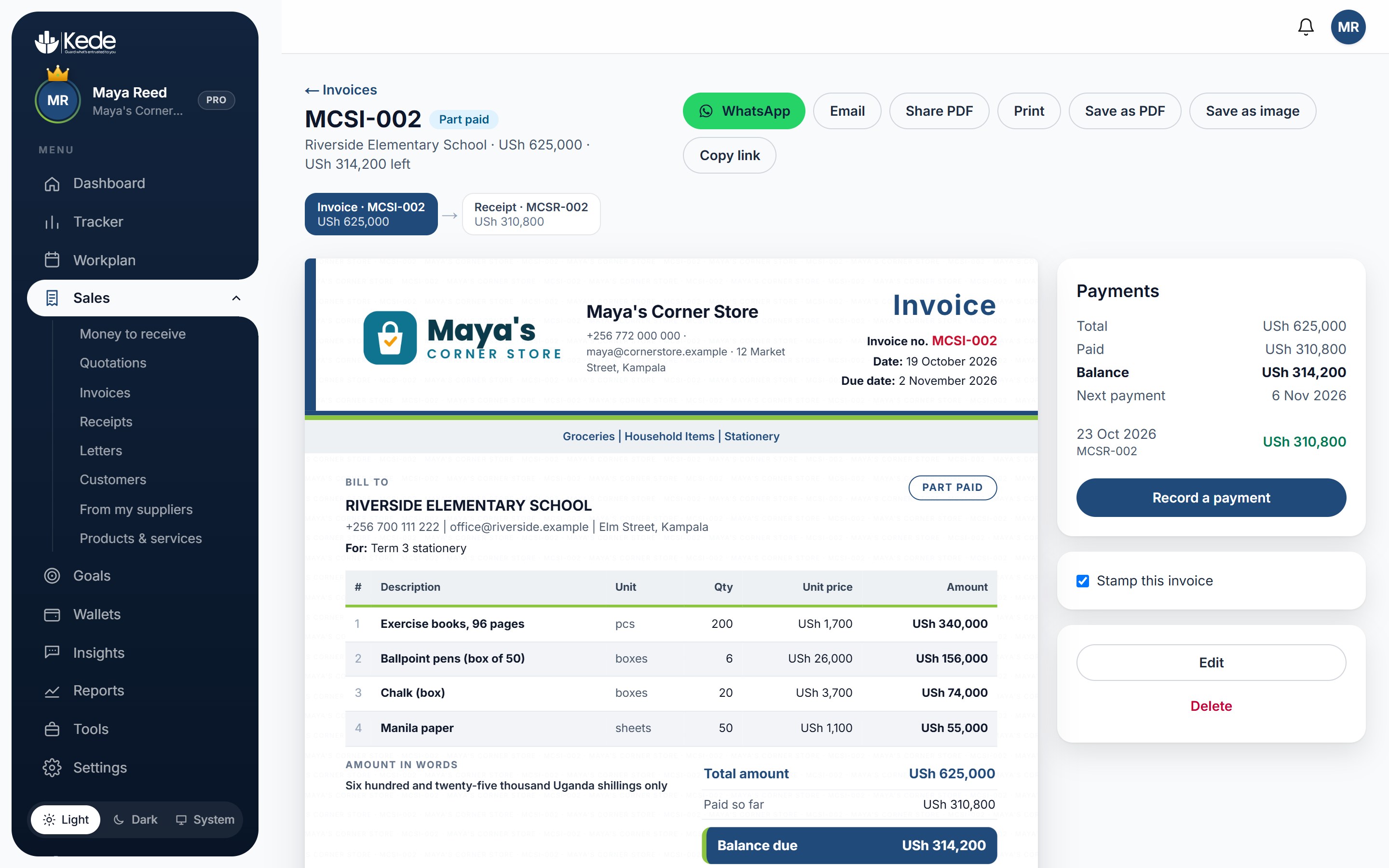 An invoice and its receipt in Kede (demo account)
Where does a proforma invoice fit?
A proforma invoice sits between a quotation and an invoice. It looks like an invoice, but it is sent before delivery. Businesses often use it when a customer needs a formal document to approve a payment, to apply for funds or to pay a deposit in advance.
Legally and in your books, a proforma invoice works like a detailed quotation. It does not mean the customer owes you money yet. Once you deliver, you send the real invoice. In Kede, a quotation with your logo, items, validity date and ways to pay serves this purpose well.
Quote vs invoice: which one should you send?
Use this simple rule:
- The customer is asking "how much?" Send a quotation.
- You have delivered, and the customer owes you. Send an invoice.
- The customer has just paid you. Give a receipt.
Do you sell for cash on the spot? Then you can skip the quotation and the invoice and give a receipt straight away. Do you sell on credit? Then the invoice matters most, because it is how you keep track of who owes you.
How to keep all three linked
The trouble with paper is that the three documents drift apart. You find the quotation in one book, the invoice in another and the receipts in a drawer. As a result, it is hard to know what a customer still owes.
Kede's Sales tools keep one sale in one trail. You write a quotation, tap Turn into an invoice when the customer agrees, and tap Record a payment each time money comes in. Kede makes the receipt, updates the balance and lists everyone who still owes you. Your logo and your ways to pay appear on every page.
Kede documents are business records for you and your customers. They are not fiscal receipts. If your business must issue electronic receipts through EFRIS, the Uganda Revenue Authority explains the rules.
Quotation vs invoice: the short answer
So, quotation vs invoice comes down to timing and meaning. A quotation is an offer before the sale. An invoice is a request for payment after delivery. A receipt confirms the money arrived. Use each one at the right moment and your customers will always know where they stand.
Try Kede free. The free plan includes 3 quotations, 3 invoices and 3 receipts every month.